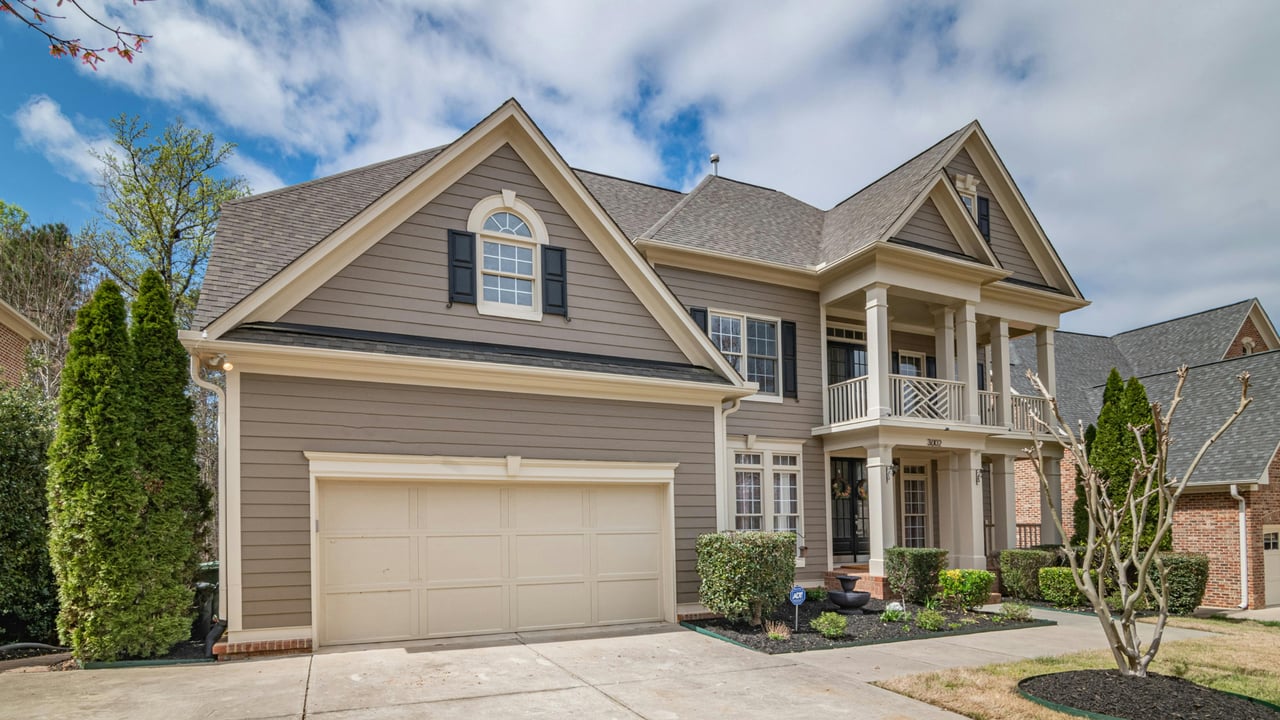
More buyers are considering communities north of Seattle - including Lake Stevens, Snohomish, Everett, Mill Creek, Bothell, Marysville, and other parts of Snohomish County - because housing decisions are about more than interest rates. Even when borrowing costs are higher, many buyers continue moving in search of more space, larger lots, access to nature, community, and a lifestyle that better fits how they actually want to live. Higher mortgage rates can change a buyer's budget, but they don't eliminate the reasons people need—or want—to move.
One of the most interesting assumptions I hear about the housing market is this:
"If interest rates are higher, why is anyone still buying?"
It's a reasonable question.
Higher rates affect monthly payments.
They affect purchasing power.
They change what some buyers can afford.
And yes, they absolutely cause some people to pause.
But here's what gets missed in that conversation:
People don't move because interest rates are good.
They move because life changes.
They get married.
They have children.
They need another bedroom.
They start working from home.
They get a new job.
They want a yard.
They want to be closer to family.
They get tired of the lifestyle they're currently living.
And increasingly, I see buyers looking north of Seattle because they're asking a bigger question than:
"What's the interest rate?"
They're asking:
"Where do I actually want to live?"
Higher interest rates changed the math. They didn't stop life.
This is the part of the housing market that's easy to forget when you're looking at headlines.
Real estate is financial.
But moving is deeply personal.
A family living in a home they've outgrown doesn't suddenly need less space because mortgage rates increased.
Someone relocating for work still needs somewhere to live.
A couple planning to have children may still want another bedroom.
A remote worker who spends most of the week at home may still decide that their current space no longer works.
Interest rates influence decisions.
They don't eliminate the reasons behind them.
That's an important distinction.
Buyers are becoming more intentional
When borrowing money is cheap, buyers can sometimes focus more heavily on what they want.
When affordability becomes tighter, priorities tend to become clearer.
The conversations change.
Instead of:
"Can we get everything?"
buyers start asking:
"What actually matters most to us?"
More space?
A shorter commute?
A larger yard?
A specific community?
Walkability?
Lake access?
Privacy?
A home office?
Those conversations often lead buyers to reconsider where they're searching.
And for some, that means looking farther north.
Why are buyers looking north of Seattle?
There's no single answer.
But I hear several reasons repeatedly.
Buyers are looking for:
- more space
- larger lots
- access to nature
- quieter neighborhoods
- community
- outdoor recreation
- different housing options
- a lifestyle that feels less dense
That doesn't mean everyone wants to leave Seattle.
Plenty of people love city life.
But for buyers whose priorities have changed, communities north of Seattle can offer a very different version of daily life.
And sometimes, that's exactly what they're looking for.
Space means something different than it used to
A few years ago, an extra bedroom might have been considered a bonus.
Today, it could be:
A home office.
A gym.
A playroom.
A guest room.
Or all four at different points in the week.
The way people use their homes has changed.
For hybrid and remote workers especially, home isn't simply where life happens after work.
It may also be where they spend eight or ten hours of the workday.
Suddenly:
Natural light matters more.
Outdoor space matters more.
A separate office matters more.
Privacy matters more.
And when buyers start prioritizing those things, geography often expands.
Hybrid work changed the map
This may be one of the biggest reasons some buyers are willing to look farther from Seattle or the Eastside.
A five-day commute and a two-day commute are completely different lifestyle calculations.
Someone who needs to be in downtown Seattle every weekday may prioritize proximity.
Someone who works from home three days a week may decide they're willing to drive farther on Tuesday and Thursday in exchange for loving where they live the rest of the week.
That shift has changed how many buyers think about location.
They're no longer asking only:
"How close is this to my office?"
They're also asking:
"Where do I want to spend most of my life?"
For some people, the answer is increasingly north of Seattle.
Lake Stevens offers something buyers can't recreate everywhere
I was born and raised in Lake Stevens, so I've watched this area change over the years.
But one thing hasn't changed:
The lake is part of the lifestyle here.
Summer isn't just something you experience on weekends.
It's boats on the water.
Paddleboards.
Swimming.
Sunsets.
Aquafest.
Kids growing up around the lake.
Even if you don't own waterfront property, living near the lake shapes the community.
For buyers who want outdoor recreation to become part of normal life—not something they have to plan a vacation around—that can be a major draw.
Snohomish offers a completely different version of the same idea
Drive a relatively short distance and the lifestyle changes.
Some buyers are drawn to Snohomish because they want:
- more land
- larger properties
- historic character
- privacy
- room for a shop
- gardening
- animals
- a quieter pace
They're not necessarily searching for the biggest house they can afford.
They're searching for a particular way of living.
That's something price-per-square-foot comparisons often fail to capture.
Everett, Mill Creek, Bothell, and Marysville each solve different problems
One of the mistakes buyers make when they start looking north is treating Snohomish County as one market.
It isn't.
Someone considering Everett may have very different priorities from someone considering Mill Creek.
A buyer exploring Bothell may be balancing access to the Eastside with suburban living.
Someone considering Marysville may be expanding their search for different housing options or more space.
A family drawn to Lake Stevens may prioritize the lake, community, and outdoor lifestyle.
That's why I don't think the question should be:
"Where should I move north of Seattle?"
The better question is:
"Which community solves the problem I'm trying to solve?"
The monthly payment still matters
Let's be very clear about this.
Lifestyle doesn't make affordability disappear.
Higher interest rates can significantly affect:
- monthly mortgage payments
- purchasing power
- the price range buyers can realistically consider
- how much cash they want to keep after closing
Buyers should understand those numbers before falling in love with a home.
But affordability isn't simply about buying the cheapest house possible.
It's about deciding what you're comfortable spending for the life that comes with it.
For one buyer, being closer to Seattle may be worth paying more for less space.
For another, driving farther may be worth it for a yard, an office, or more privacy.
Neither decision is automatically better.
Buyers are making tradeoffs, not giving up
This is one of the biggest changes I see.
When affordability becomes more challenging, buyers don't necessarily stop wanting a home.
They adjust.
Maybe they:
- expand their search area
- buy a smaller home
- choose a different neighborhood
- wait longer to save
- compromise on cosmetic updates
- prioritize location over size
- prioritize size over commute
Good home buying has always involved tradeoffs.
Higher rates simply make those tradeoffs more visible.
"I'll just wait until rates drop" sounds simpler than it is
I hear this often.
And waiting may absolutely be the right decision for some people.
But there's something buyers need to remember:
If rates drop, you may not be the only person who has been waiting.
More purchasing power can bring more buyers back into the market.
That can affect:
- competition
- negotiating leverage
- home prices
- the number of offers on desirable properties
Nobody knows exactly what rates or home prices will do next.
That's why I don't think buying decisions should be based entirely on trying to predict the perfect market.
A better question is:
Does buying make sense for my life and finances right now?
If the answer is no, waiting can be smart.
If the answer is yes, waiting solely because you're trying to perfectly time interest rates can be a very different decision.
The buyers who are moving aren't ignoring interest rates
This is important.
They're accounting for them.
They're getting pre-approved.
They're understanding their monthly payment.
They're adjusting expectations.
They're thinking longer term.
But they're also recognizing that life doesn't always wait for perfect economic conditions.
I've worked with buyers who found the right home quickly.
Others searched for months.
Some changed areas entirely once they understood what different communities could offer.
The strongest decisions usually happen when buyers understand both sides:
the numbers and the lifestyle.
Why community matters more than people expect
A house is one part of where you live.
Your actual life happens around it.
Where do you get coffee?
Where do your kids play?
Where do you walk after dinner?
How long does it take to get to the places you visit every week?
What does Saturday morning look like?
Do you know your neighbors?
Do you feel connected to the community?
These questions rarely appear on mortgage calculators.
But five years after buying a home, they may matter more than the things buyers initially obsessed over.
That's one reason I think buyers are becoming more thoughtful about where they live.
They're not just shopping for houses.
They're shopping for everyday life.
Is moving north of Seattle right for everyone?
No.
And I think it's important to say that.
If you:
- need to be in Seattle or Bellevue five days a week
- strongly dislike driving
- prioritize urban walkability
- want nightlife outside your front door
- don't want to maintain a larger property
then moving farther north may not improve your life.
A bigger house isn't automatically a better life.
More land isn't automatically better.
A lake isn't useful if you don't care about lake life.
The goal isn't to convince everyone to move north.
It's to help people understand the tradeoff before they do.
Who tends to love living north of Seattle?
In my experience, it's often people who value:
- space
- outdoor access
- community
- a slower daily pace
- room to grow
- spending more time at home
- weekend recreation
- being close enough to the city without living in it
For those buyers, higher interest rates may change the budget.
But they don't necessarily change the goal.
The housing market is really a life market
We talk about real estate as if people move based on charts.
Rates go up.
Demand goes down.
Rates go down.
Demand goes up.
Real life is much messier than that.
People move because something in their life changed.
And when enough people's priorities change at the same time, the map changes too.
That's what I think we're seeing when buyers expand their searches north of Seattle.
Not everyone is chasing a cheaper house.
Many are chasing a different life.
Higher interest rates matter.
Affordability matters.
Monthly payments matter.
But they aren't the only things that determine where people choose to live.
For many buyers considering Lake Stevens, Snohomish, Everett, Mill Creek, Bothell, Marysville, or other communities in Snohomish County, the decision comes down to a bigger question:
What do I want my everyday life to look like?
Maybe that means being closer to work.
Maybe it means having more space.
Maybe it means lake days, a bigger backyard, a home office, or quieter weekends.
There's no universal right answer.
I've been born and raised in Lake Stevens, and I love this area.
But my job isn't to tell every buyer they should live here.
It's to help them understand what life here actually looks like—and whether that fits the life they're trying to build.
Because interest rates will change.
Markets will change.
Your mortgage payment matters.
But so does the life you're living while you're paying it.
If you're trying to decide whether moving north of Seattle makes sense for you, I'm always happy to help you compare the communities, commutes, homes, and tradeoffs honestly.
Sometimes the right answer is closer to the city.
Sometimes it's farther north.
The goal is figuring that out before you move.