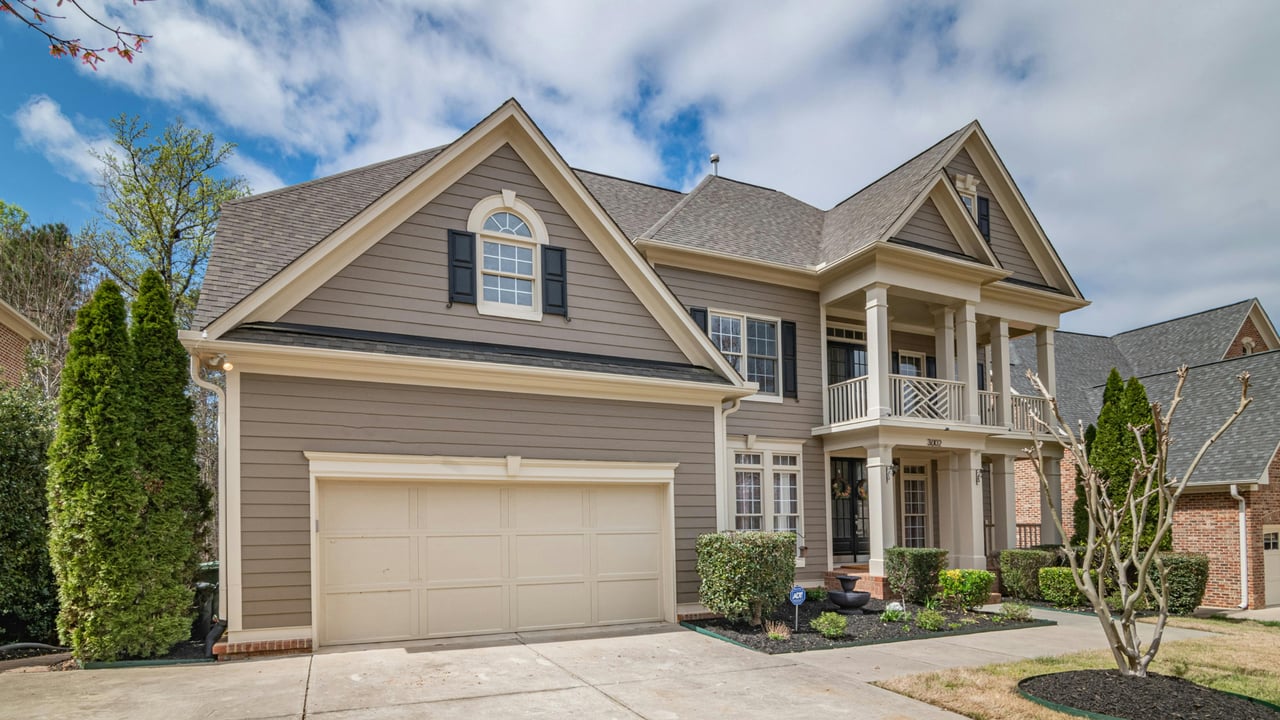
Yes, many people live in Lake Stevens, Washington, and commute to Seattle, Bellevue, Redmond, Everett, and other employment centers in the Puget Sound region. But a daily commute to Seattle or the Eastside can be long and highly dependent on traffic, work hours, route, and schedule flexibility. Lake Stevens tends to work best for commuters with hybrid schedules, flexible hours, or people who genuinely value more space and the Lake Stevens lifestyle enough to accept the tradeoff. If you need to drive into Seattle, Bellevue, or Redmond five days a week during peak rush hour, the commute should be a major part of your home-buying decision.
One of the most common questions I hear from people considering a move to Lake Stevens is:
"Can I realistically commute from Lake Stevens to Seattle?"
Or Bellevue.
Or Redmond.
And my honest answer is always:
Yes. But let's talk about what "realistically" means for you.
Because looking at the distance on a map doesn't tell you what your Tuesday morning will actually feel like.
Neither does checking Google Maps at 9 p.m.
I've lived in this area my entire life, and one of the biggest mistakes I see relocation buyers make is choosing a home based on how a commute looks on paper.
Then they actually have to drive it.
Every day.
In February.
In the dark.
During rush hour.
That's when a 30-mile distance and a 30-mile lifestyle start feeling like two very different things.
So, can you commute from Lake Stevens to Seattle every day?
Technically?
Absolutely.
People do it.
The better question is:
Would you want to?
That depends heavily on:
- what time you start work
- where exactly your office is
- whether you work from home part of the week
- how much control you have over your schedule
- how much time you're personally willing to spend commuting
- and what you're getting in exchange for living farther north
For some people, the tradeoff is completely worth it.
For others, it becomes exhausting surprisingly quickly.
The first thing to understand: there is no single "Lake Stevens to Seattle commute"
This matters.
Saying you work in "Seattle" isn't specific enough.
An office in North Seattle is a very different commute from an office downtown.
The same is true on the Eastside.
Working in downtown Bellevue is different from working somewhere in Redmond.
Where you live within Lake Stevens matters too.
Your proximity to major roads and the route you need to take can change your daily experience.
Then add:
- school traffic
- weather
- accidents
- construction
- special events
- the day of the week
And suddenly a simple commute estimate becomes much more complicated.
That's why I always tell buyers:
Don't choose a home based on the best-case commute.
Think about the commute you'll actually be doing most often.
What is the commute from Lake Stevens to Seattle really like?
If you're driving from Lake Stevens toward Seattle during traditional weekday rush hours, you should expect traffic to be part of the experience.
That's the honest answer.
The commute can vary significantly depending on:
- your starting point in Lake Stevens
- your destination in Seattle
- when you leave
- current road conditions
- traffic incidents
On a lighter traffic day or outside peak hours, the drive can feel manageable.
During heavy commuter periods, it can feel very different.
And that's exactly why I hesitate when someone asks me:
"How long does it take?"
The answer isn't one number.
The more useful question is:
How much variability can you tolerate in your day?
Some people don't mind leaving earlier, listening to a podcast, and accepting that traffic is part of the tradeoff.
Other people become frustrated when a commute they expected to take a certain amount of time suddenly takes much longer.
Know which person you are before you buy.
What about commuting from Lake Stevens to Bellevue?
This is where buyers need to think carefully about their daily route.
Bellevue is a major employment center, particularly for people working in technology, professional services, and corporate roles.
And many people working on the Eastside start looking north because they want:
- more space
- a larger yard
- a different pace of life
- access to the outdoors
- more home for their budget than they may find closer to Bellevue
Those benefits can be significant.
But the commute is the tradeoff.
If you're driving to Bellevue during peak commuter hours five days a week, I would never tell you to ignore that reality just because you love a house in Lake Stevens.
You need to decide whether the home and lifestyle are worth the time you'll spend getting to and from work.
For some people?
Absolutely.
For others?
Probably not.
Is commuting from Lake Stevens to Redmond realistic?
Yes, but again, your schedule matters.
Redmond attracts many technology workers, and the rise of hybrid work has changed the equation for a lot of buyers.
Someone commuting to Redmond two days a week may look at Lake Stevens very differently from someone making the trip Monday through Friday.
That's one of the biggest changes I've seen in how people choose where to live.
Before hybrid work became common, many buyers prioritized minimizing every minute of their commute.
Now, some people are willing to travel farther a couple of days a week in exchange for spending the other five days somewhere they genuinely prefer living.
That's a completely different calculation.
Hybrid work changed the Lake Stevens conversation
This may be the most important part of the entire discussion.
For many buyers, the question is no longer:
"Can I commute from Lake Stevens five days a week?"
It's:
"Can I commute two or three days a week and enjoy living here the rest of the time?"
That's where Lake Stevens starts making significantly more sense for many people.
Imagine two scenarios.
Scenario A
You commute into Seattle or Bellevue five days a week during peak hours.
Scenario B
You commute twice a week and work from home the other three days.
Same house.
Same distance.
Completely different lifestyle.
For hybrid workers, the extra bedroom that becomes an office, the larger backyard, the lake access, and the quieter environment may matter far more because they're actually spending more of their week at home.
The home itself becomes a bigger part of daily life.
Who tends to handle the commute well?
In my experience, the people who are happiest with a longer commute usually have a clear reason for choosing it.
Maybe they wanted:
- more space
- a larger lot
- lake access
- a quieter neighborhood
- a specific community
- more separation between work and home
- a lifestyle they couldn't find closer to the office
They don't see the commute as an unexpected inconvenience.
They see it as a conscious tradeoff.
That distinction matters.
People also tend to handle it better when they have:
- a hybrid work schedule
- flexible start and finish times
- the ability to avoid peak traffic
- only a few commuting days per week
- a genuine preference for living farther from the city
If you love where you live, you may be more willing to accept the drive.
Who usually hates it?
This is equally important.
You may want to think twice about living in Lake Stevens while commuting south if:
- you strongly dislike driving
- unpredictable travel times make you anxious
- you need to be in Seattle or the Eastside five days a week
- you work rigid peak-hour schedules
- being close to work is one of your highest priorities
- you frequently need to return home quickly during the day
- you already feel exhausted by your current commute
A beautiful house doesn't make traffic disappear.
That's something buyers need to hear before they make a decision.
Not after.
The question couples and families sometimes forget to ask
A commute doesn't only affect the person driving it.
It affects the household.
If one person is spending significant time commuting, what does that mean for:
- school pickup?
- daycare?
- dinner?
- kids' activities?
- exercise?
- time together?
- unexpected emergencies?
Sometimes a commute looks completely reasonable when viewed as a transportation question.
It feels different when you view it as a family schedule.
That's why I encourage couples to think beyond:
"Can we do this?"
and ask:
"What will our normal Tuesday look like?"
That question often reveals much more.
The commute you're willing to make today may not be the commute you want in five years
This is another consideration buyers sometimes overlook.
Maybe you're comfortable with a longer commute right now.
But what happens if:
- your company changes its remote-work policy?
- you change jobs?
- you have children?
- your schedule becomes less flexible?
- your partner's work location changes?
Nobody can predict every future change.
But it's worth thinking about flexibility.
Real estate decisions are rarely just about the life you have today.
They're also about giving yourself options for the life you may have later.
Why people still choose Lake Stevens anyway
After all of that, you might be wondering:
"If the commute can be difficult, why do people still do it?"
Because for the right person, what they gain is worth it.
They come home to a different lifestyle.
For some people, that means:
- more space
- lake access
- outdoor recreation
- a backyard
- quieter evenings
- a stronger sense of community
- weekends that feel completely different from their workweek
I've always believed that where you live isn't just where you sleep between workdays.
It's where your actual life happens.
For some buyers, being closer to the office is the priority.
For others, they'd rather accept a longer commute and come home to a place that fits the life they want outside of work.
Neither decision is wrong.
The best advice I can give: test the commute before you buy
Not on Sunday afternoon.
Not at 11 a.m.
Drive it when you would actually be commuting.
If you're considering a home in Lake Stevens and your office is in Seattle, Bellevue, or Redmond:
Make the drive.
Leave at the time you'd normally leave.
Drive to your actual workplace.
Then do the return trip.
Ask yourself:
- How did that feel?
- Would I do this every day?
- What about twice a week?
- What am I gaining by living farther away?
- Is that tradeoff worth it to me?
A commute calculator can give you data.
Actually driving the route gives you perspective.
A home can be perfect and still be wrong for your life
This may be the most important thing I tell buyers.
I've walked through homes that checked almost every box.
Beautiful kitchen.
Great backyard.
Plenty of space.
The buyers loved them.
But once we talked honestly about their daily routine, the location didn't make sense.
That's not a failed home search.
That's a good decision.
My job isn't to convince someone to live in Lake Stevens just because I grew up here and love it.
It's to help people understand whether their life works here.
Sometimes the answer is absolutely yes.
Sometimes it's no.
And both answers are valuable.
So, is living in Lake Stevens worth the commute?
For many people, yes.
Especially if you:
- work remotely or hybrid
- have schedule flexibility
- don't commute every day
- value space and lifestyle over proximity to work
- genuinely want to live in Lake Stevens
For others, particularly people commuting to Seattle, Bellevue, or Redmond five days a week during peak hours, the tradeoff may be harder to justify.
The most important thing is not to romanticize either side.
Living closer to work can give you more time.
Living farther away may give you more of the lifestyle you want.
The right decision depends on which one matters more to you.
I've been born and raised in Lake Stevens, so I'm obviously biased about how much I love this area.
But loving a place doesn't mean pretending it's perfect for everyone.
If you're thinking about moving to Lake Stevens while working in Seattle, Bellevue, Redmond, Everett, or elsewhere in the Puget Sound region, the commute deserves a real conversation.
Not just a mileage calculation.
Think about:
Your work schedule.
Your tolerance for traffic.
Your family routine.
Your priorities.
And what you want life to feel like when you finally get home.
Because you're not just choosing a commute.
You're choosing what happens on both sides of it.
And if you're trying to figure out whether Lake Stevens, Snohomish, Bothell, Mill Creek, Everett, or another community north of Seattle makes the most sense for your lifestyle, I'm always happy to help you think through the tradeoffs honestly.
The goal isn't to find the place that looks best on a map.
It's to find the place that actually works for your life.