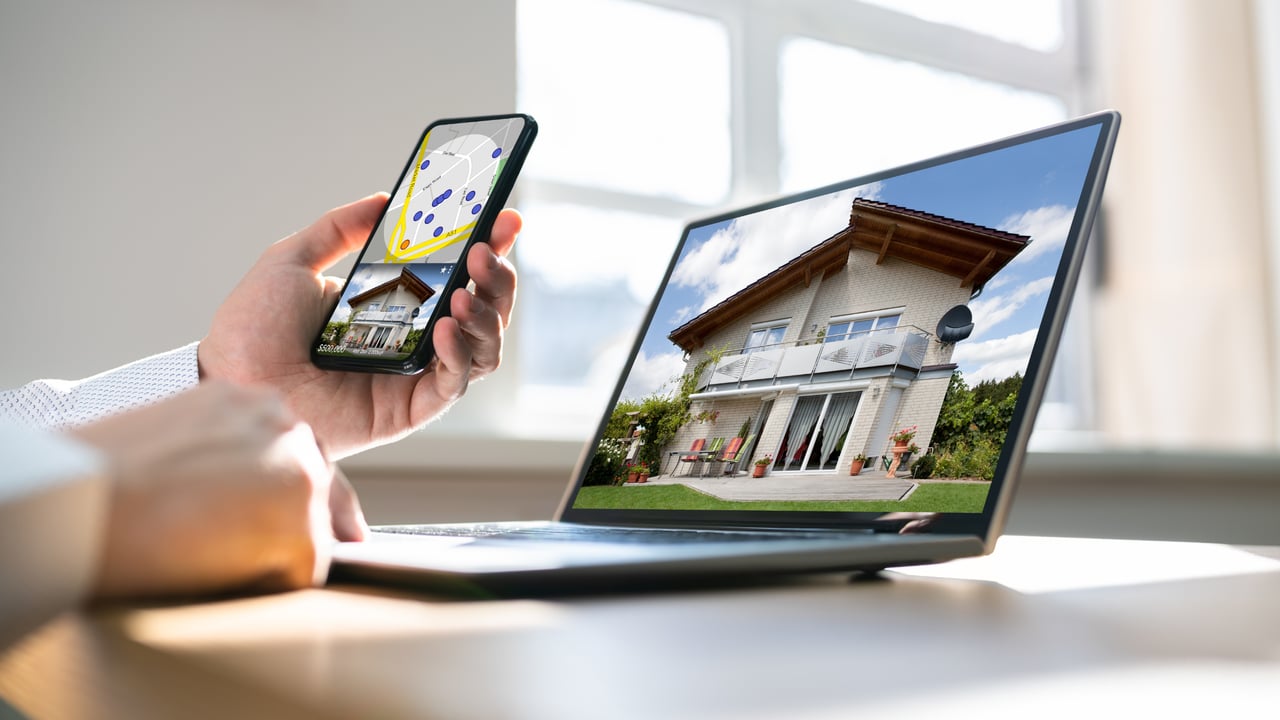
Most sellers picture the first showing happening when a buyer pulls into the driveway.
They imagine the front door opening.
The buyer stepping inside.
Looking around the living room.
Walking toward the kitchen.
Maybe saying something encouraging like:
“Oh, this is nicer than I expected.”
But by the time that moment happens, your home has already been through dozens, sometimes hundreds, of tiny evaluations.
The buyer has seen the first photo.
Then the second.
They've looked at the kitchen.
Zoomed in on the backyard.
Checked the square footage.
Studied the map.
Sent the listing to their spouse.
Maybe compared it with four other homes sitting in their saved folder.
And somewhere during that process, they made the first important decision about your property:
Is this home worth my time?
That is your first showing.
And it happened online.
Your home's first showing happens online because buyers usually decide whether a property deserves an in-person visit before they ever walk through the door.
Photos, floor plans, video, pricing, listing information and the overall presentation create the buyer's first understanding of the property.
The goal is not simply to make the home look attractive.
It is to make the right buyer stop scrolling, understand what makes the property valuable, and feel enough curiosity and confidence to schedule the second showing, the one that happens in person.
That distinction matters.
Because if the first showing fails, the second one may never happen.
Buyers aren't browsing casually anymore
Home search behavior has changed so gradually that sellers sometimes underestimate how dramatically different the process feels today.
The buyer sitting on their couch at 9:30 at night can compare twenty properties without speaking to anyone.
They can dismiss one because the kitchen feels too dark.
Save another because the backyard looks incredible.
Send a third to their partner.
Zoom into a satellite image.
Check the commute.
Research the neighborhood.
Then return to the first listing and decide they actually like it more than they thought.
That entire emotional process can happen before an agent ever schedules a tour.
NAR's 2025 research found that looking online for properties was the most common first step in the home search process across generations. Among buyers who used the internet, photos were rated “very useful” by 83%, detailed property information by 79%, and floor plans by 57%.
Zillow's 2025 prospective-buyer research tells a similar story from another angle: floor plans ranked as the most important listing feature, followed by high-resolution photography and 3D or virtual tours.
In other words:
The digital version of your home isn't an advertisement for the real showing. It is part of the showing.
Buyers don't scroll listings the way sellers imagine
Sellers often look at their own listing very differently from buyers.
They know the house.
They know what the rooms connect to.
They know the backyard is bigger than it looks.
They know the morning light in the kitchen is incredible.
They know the view from the upstairs bedroom.
So when they see a photo that doesn't quite communicate something, their brain fills in the missing information automatically.
A buyer's brain cannot.
They see only what you give them.
That's why a poorly photographed room isn't simply “a bad picture.”
It can become:
That room looks tiny.
The house seems dark.
I can't understand the layout.
Why aren't they showing the backyard?
Is something wrong with that bathroom?
Sellers know what isn't visible.
Buyers interpret what isn't visible.
And those are very different experiences.
The first photo has one job
Stop the scroll.
Not with tricks.
Not with exaggerated wide-angle photography.
Not with a photo so heavily edited that the house looks like it exists in another climate.
It simply needs to answer:
Why should I care about this home?
That answer is different for every property.
For a Lake Stevens waterfront home, it may be the relationship between the house and the water.
For acreage outside Snohomish, it may be the sense of space and privacy.
For a Bothell home, it may be a bright interior combined with location and convenience.
For a Mill Creek property, it might be the way the living space connects to the backyard.
The strongest hero image isn't always the front exterior.
It's the image that most clearly communicates the property's biggest reason to exist in a buyer's search.
I've seen sellers want to lead with a technically perfect exterior photo because that's what listings are “supposed” to do.
Sometimes that makes sense.
Sometimes the real story is sitting behind the house.
If your backyard looks out over Lake Stevens at sunset, I'm probably not hiding that until photo 27.
Great photography doesn't make a home something it isn't
This matters.
There is a difference between presenting a home beautifully and creating an expectation the home cannot meet.
Wide lenses can make rooms feel larger.
Aggressive editing can make skies impossible.
Poor image sequencing can make a small property feel confusing.
And if buyers walk through the door thinking:
“This is much smaller/darker/different than I expected,”
you've started the physical showing with disappointment.
That's the opposite of what good marketing should accomplish.
The best photography does not manipulate.
It clarifies.
It shows scale accurately.
It shows how rooms connect.
It draws attention to the features buyers are likely to care about.
It makes someone think:
“I want to see what this feels like in person.”
And then, ideally, the in-person experience is even bette.
Floor plans solve a problem sellers don't realize buyers have
One of the most common frustrations buyers experience online is trying to understand how a home fits together.
Where is the primary bedroom relative to the others?
Is the office actually separated from the living area?
Does the kitchen open into the family room?
Is that downstairs bedroom near a bathroom?
Does the bonus room work for what we need?
Photos communicate atmosphere.
Floor plans communicate logic.
That's why buyers value them so highly.
The photos might make someone fall in love with the living room.
The floor plan helps them determine whether their actual life works inside the house.
That distinction matters particularly when buyers have specific needs.
Hybrid work.
Multigenerational living.
Young children.
Guests.
A home gym.
Multiple vehicles.
Storage.
A dog that absolutely believes every door belongs to him.
The more complicated the buyer's life is, the more valuable spatial clarity becomes.
Video should answer a different question than photography
Photos tell buyers:
Here's what the home looks like.
Good video can tell them:
Here's what moving through it feels like.
That's why simply turning photographs into a slideshow isn't the same thing as property video.
Movement helps communicate flow.
You see how the kitchen opens to the patio.
How the bedroom leads to the balcony.
How close the dock actually is to the house.
How the backyard feels when you step outside.
And lifestyle becomes much easier to communicate.
For some properties, the most important moment isn't a room.
It's opening a glass door and seeing the lake.
Walking down a long private driveway.
Standing on a covered patio surrounded by mature trees.
Watching the property transition from interior space to acreage.
Video allows the buyer to experience that reveal.
That's important because people aren't only buying features.
They're imagining routines.
Sometimes the property's biggest selling point isn't the property
This is where local knowledge changes marketing.
A listing might say:
“Close to North Cove Park.”
Technically accurate.
But what does that mean to someone relocating from California?
Or Seattle?
Or Bellevue?
If they don't know Lake Stevens, they may have no emotional connection to that sentence.
A local understands something different.
They understand what summer looks like around the lake.
They know why being close to downtown matters differently than simply being “near amenities.”
They understand which properties feel tucked away while still being practical for everyday errands.
They know how local trails, parks, waterfront access, commute routes and community traditions shape daily life.
That's why good real estate marketing shouldn't only explain what the house has.
It should help the right buyer understand why living there might matter.
Zillow's 2025 search trends also showed buyers increasingly searching for lifestyle-oriented features such as proximity to water, adaptable spaces and comfort rather than simply traditional luxury markers.
That tracks closely with what I see locally.
People don't just ask me:
“How big is the lot?”
They ask:
“Could we actually have people over here?”
“How far are we from the lake?”
“Could I work from home in that room?”
“Where would we keep the boat?”
“What's this neighborhood actually like?”
The listing should begin answering those questions before I ever meet them at the house.
Your online listing is constantly being compared
This is one of the most important realities for sellers to understand.
Your buyer does not look at your home alone.
They look at your home next to other homes.
Same price range.
Similar commute.
Comparable number of bedrooms.
Maybe completely different cities.
A buyer might be comparing:
a newer home in Lake Stevens,
an older house in Bothell,
a townhouse closer to Bellevue,
and a larger property in Snohomish.
Those aren't identical houses.
But they're competing for the same buyer's money.
That's why perceived value is relative.
The buyer is asking:
“Which of these gives me the life I want for the money I'm spending?”
Photography, video, floor plans and strong listing information help them answer that question.
Poor presentation leaves them guessing.
And when another listing makes the decision easier, buyers often choose the easier one to pursue.
This is why “we can always take better photos later” is a bad plan
One of the biggest mistakes a seller can make is thinking the listing can be improved after launch without consequence.
Technically, yes.
You can replace photography.
Rewrite the description.
Add video.
Adjust positioning.
But buyers who were actively waiting for a home like yours may already have seen it.
Your first few days on the market are when the listing is new.
Saved searches trigger.
Buyer agents notice it.
People who have been watching inventory see something they haven't seen before.
That first wave matters.
If those buyers dismiss the home because the presentation doesn't communicate its value, updating it later doesn't guarantee they'll come back.
You only get one first impression.
Real estate is particularly unforgiving about that because the listing accumulates history while you're fixing it.
What actually makes someone stop scrolling?
It isn't always the most expensive feature.
Sometimes it's specificity.
A covered patio that makes sense in Western Washington.
An extra-deep garage for someone's hobbies.
A backyard with enough usable space for kids or dogs.
A home office that actually has a door.
A view from the bedroom.
Private lake access.
A workshop.
A driveway that solves an RV problem.
A kitchen layout that lets someone cook while still being part of the room.
This is where sellers can get trapped by what they value.
Maybe you spent $40,000 upgrading something buyers barely notice.
Meanwhile, the mature landscaping you take for granted is the thing that makes someone stop scrolling because every other property they've looked at feels exposed.
Good marketing requires distance.
You have to stop seeing your home through the memories attached to it and start seeing it through the buyer's decision.
A micro-story I see all the time
A buyer sends me a listing and says:
“I don't know why, but I really want to see this one.”
That sentence is interesting.
They rarely say:
“The SEO keyword density was excellent.”
They don't say:
“The marketing funnel worked on me.”
They simply felt enough interest to take the next step.
Then we walk through the property.
Sometimes the home confirms everything they hoped.
Sometimes it doesn't.
But the listing accomplished its first job:
It created a reason to experience the property in person.
I've also had the opposite happen.
A buyer reluctantly agrees to see a home because I think there's something the listing failed to communicate.
We walk inside and they say:
“Why do the photos make this look so bad?”
That's frustrating.
Because the house was doing its job.
The marketing wasn't.
And sellers never know how many buyers never gave that property the second chance.
There is such a thing as too much marketing
This article is not an argument for throwing every possible marketing tactic at every listing.
Not every property needs dramatic drone footage.
Not every home benefits from a cinematic three-minute video.
Not every buyer is going to watch every piece of content.
More isn't automatically better.
The strategy should fit the house.
If you're selling acreage, aerial context can be incredibly useful.
If you're selling waterfront, buyers should understand the relationship between the house, shoreline and dock.
If you're selling a compact urban property, layout clarity may matter more.
If the home's biggest value is its location, neighborhood storytelling matters.
The question isn't:
“How much marketing can we create?”
It's:
“What does a buyer need to understand this home?”
The tradeoff sellers need to understand: attention isn't the same as demand
A listing can get thousands of views and still not sell.
That's why online performance has to be interpreted carefully.
Views tell you people noticed the property.
Clicks suggest curiosity.
Saves can suggest interest.
Showing requests move that interest closer to action.
Offers are a completely different level of commitment.
This is the same psychology I see throughout the selling process:
Attention → understanding → confidence → action.
Marketing can create the first two.
The home, price and in-person experience need to support the rest.
That is why great photography cannot rescue poor pricing forever.
Video cannot erase serious condition concerns.
A beautiful Instagram Reel does not make an unrealistic seller expectation disappear.
Marketing amplifies the property and its positioning.
It doesn't replace them.
The first showing and the second showing have to tell the same story
This may be the simplest way to think about the entire strategy.
Your online listing says:
“Come see this.”
Your in-person showing needs to say:
“You're glad you did.”
If the online presentation undersells the property, you lose buyers who might have loved it.
If it dramatically oversells the property, buyers arrive disappointed.
The sweet spot is expectation plus discovery.
The buyer already understands why the home is interesting.
Then, when they arrive, they discover things that are even better in person.
Maybe the backyard feels more private.
The natural light is stronger.
The neighborhood is quieter than expected.
The view is better.
The house feels larger because the flow works beautifully.
Those positive surprises build confidence.
And confidence is what eventually moves people toward offers.
What I would ask before marketing any home
Before thinking about cameras, social media or listing copy, I'd ask:
What will make the right buyer care about this property?
Then:
Can they understand that from the first five photos?
Can they understand the layout?
Can they see the strongest lifestyle feature?
Does the property feel accurately represented?
Are we hiding something valuable too far down the listing?
Are we emphasizing features that matter to us but not necessarily to buyers?
Does someone unfamiliar with the area understand why the location matters?
And perhaps most importantly:
If I knew nothing about this house, would this listing make me want to see it?
That question is much more useful than:
“Do the photos look pretty?”
Pretty helps.
Clarity converts.
Your first showing is happening whether you're ready or not
The moment your home goes live, people begin forming opinions.
Some will never be the right buyers.
That's fine.
Your job isn't to appeal to everyone.
It's to make sure the people who could love the property have enough information and emotional reason to take the next step.
That's why I think sellers should stop treating photography, video, floor plans and listing strategy as the final administrative tasks before going live.
They're part of how buyers experience the home.
And sometimes they determine whether the buyer experiences it at all.
If you're preparing to sell in Lake Stevens, Snohomish, Everett, Mill Creek, Bothell or elsewhere in Snohomish County, the best time to think about that first showing is before the photographer ever arrives.
Because when your listing goes live, buyers won't know what the house could have looked like online.
They'll only know what you showed them.